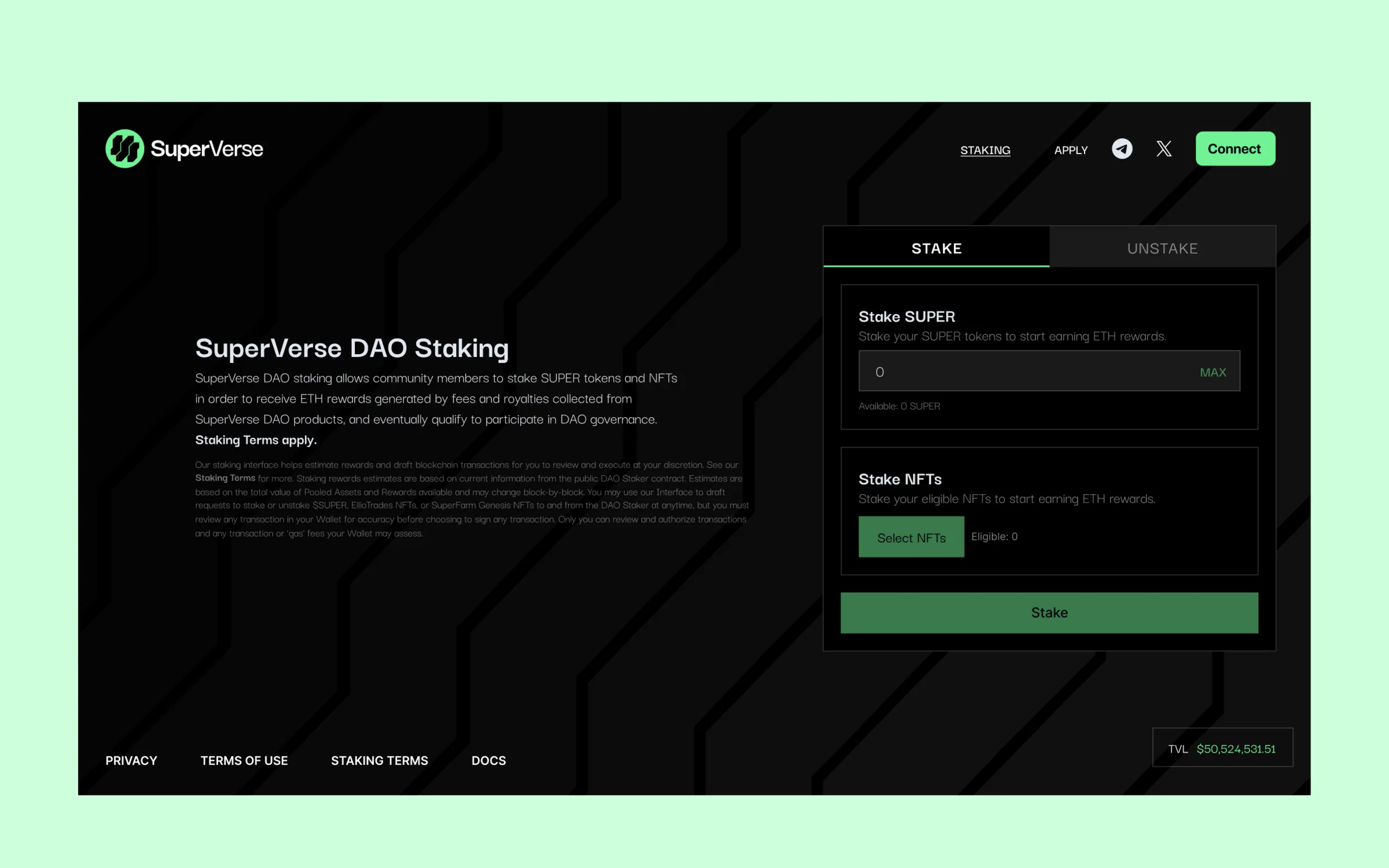
Web3 · Staking · DeFi
A staking and rewards product for the SuperVerse ecosystem, bringing token staking, NFTs, rewards and on-chain transactions into one clear interface.

Lead Designer
Product, engineering and leadership team
Product design, wireframes, UX, UI, interaction design, design system and handoff
Web · Web3

The problem
A staking product has to communicate much more than a single deposit action. Users need to understand what they are staking, what it is worth, what they can earn, what is locked, what can be withdrawn and what will happen before they approve a transaction in their wallet.
SuperStaker also had to support more than SUPER alone. The experience grew around staking power, eligible NFTs, rewards, governance and different incentive mechanisms while still making the primary actions feel straightforward.
The challenge was to expose enough information for users to make confident decisions without turning every screen into a wall of protocol mechanics.

The staking experience evolved with the ecosystem, from SUPER and NFT staking through to newer reward programmes connected to Supernova and Blackhole.
What I did
Blockchain transactions are unforgiving. Before a user signs anything, the interface needs to make the action, available balance, position and expected result clear.
I structured the staking journeys around those decisions first. Stake and unstake actions stayed prominent, while the technical detail users needed for confidence remained close enough to inspect without overwhelming the main flow.
Staking power, token balances, NFT boosts, reward thresholds and distributions can quickly become a spreadsheet of numbers.
The UI created a clear hierarchy between the user’s position, programme-level information and the actions available next. Stats were grouped by purpose so users could understand their own position before digging into the wider programme.
The product did not stay static. The original DAO staking experience supported SUPER, eligible NFTs and ETH rewards, while later SUPERxNOVA staking introduced locked positions and rewards connected to liquidity on Supernova and Blackhole.
The design system had to accommodate new programmes, tiers, reward types and position states without making the product feel like a completely different application every time the staking model changed.
Current SUPERxNOVA mechanics make that complexity visible: users stake and lock SUPER to qualify for weekly rewards. A 10,000 SUPER minimum qualifies for veNOVA rewards, while 25,000 SUPER qualifies for bonus veBLACK rewards from supported Supernova DEX and Blackhole DEX liquidity. These are product-mechanic examples, not headline claims.
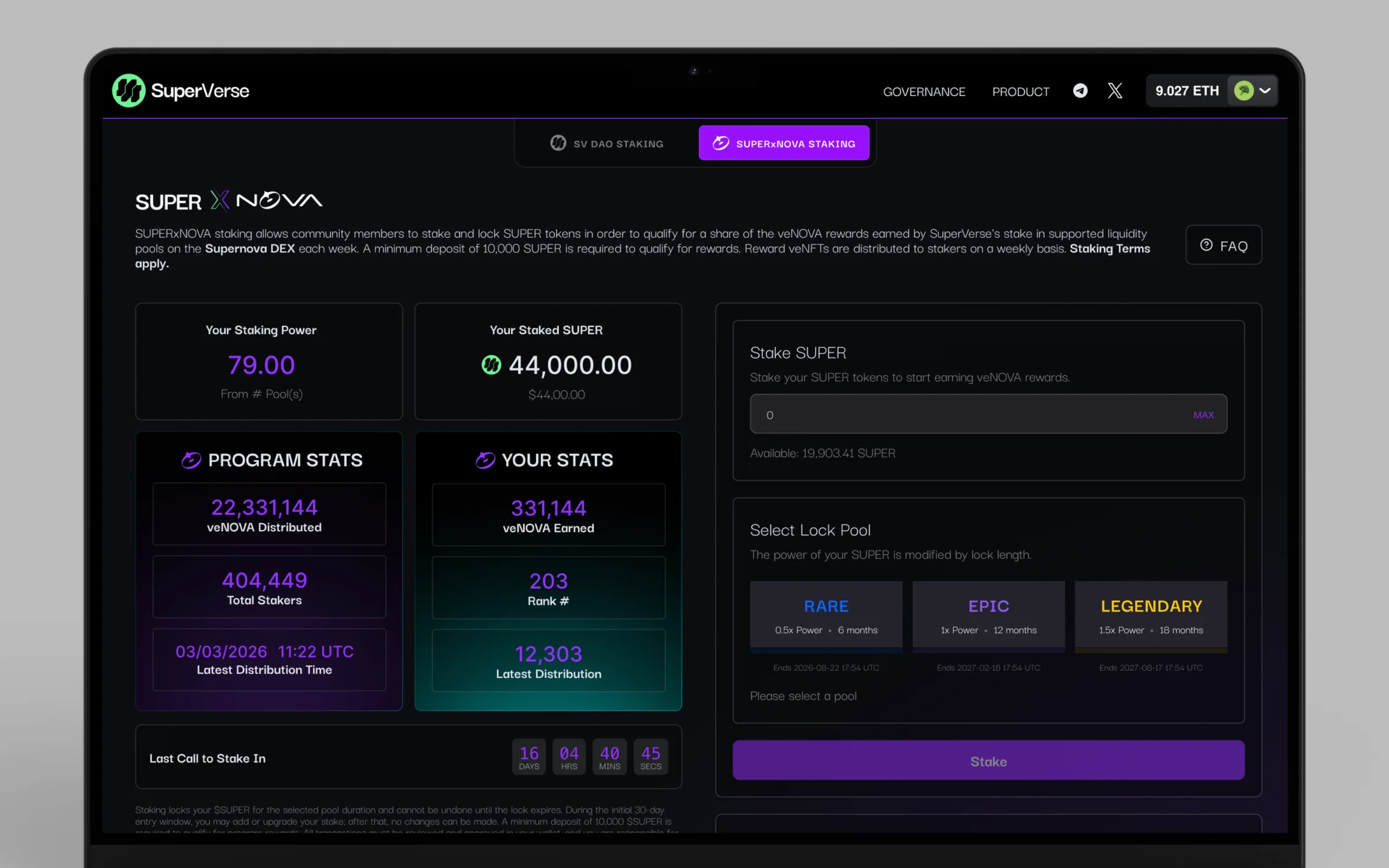
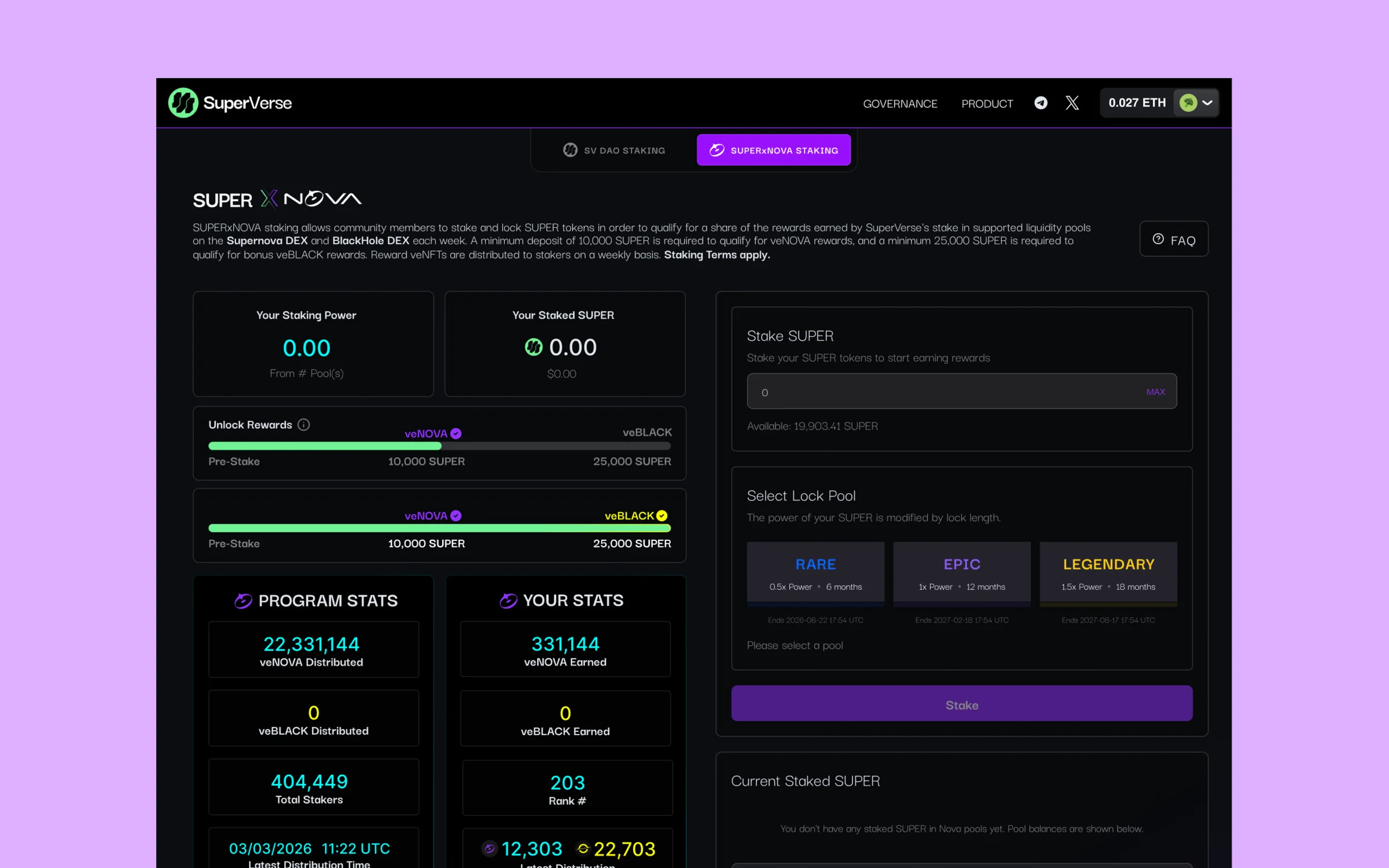
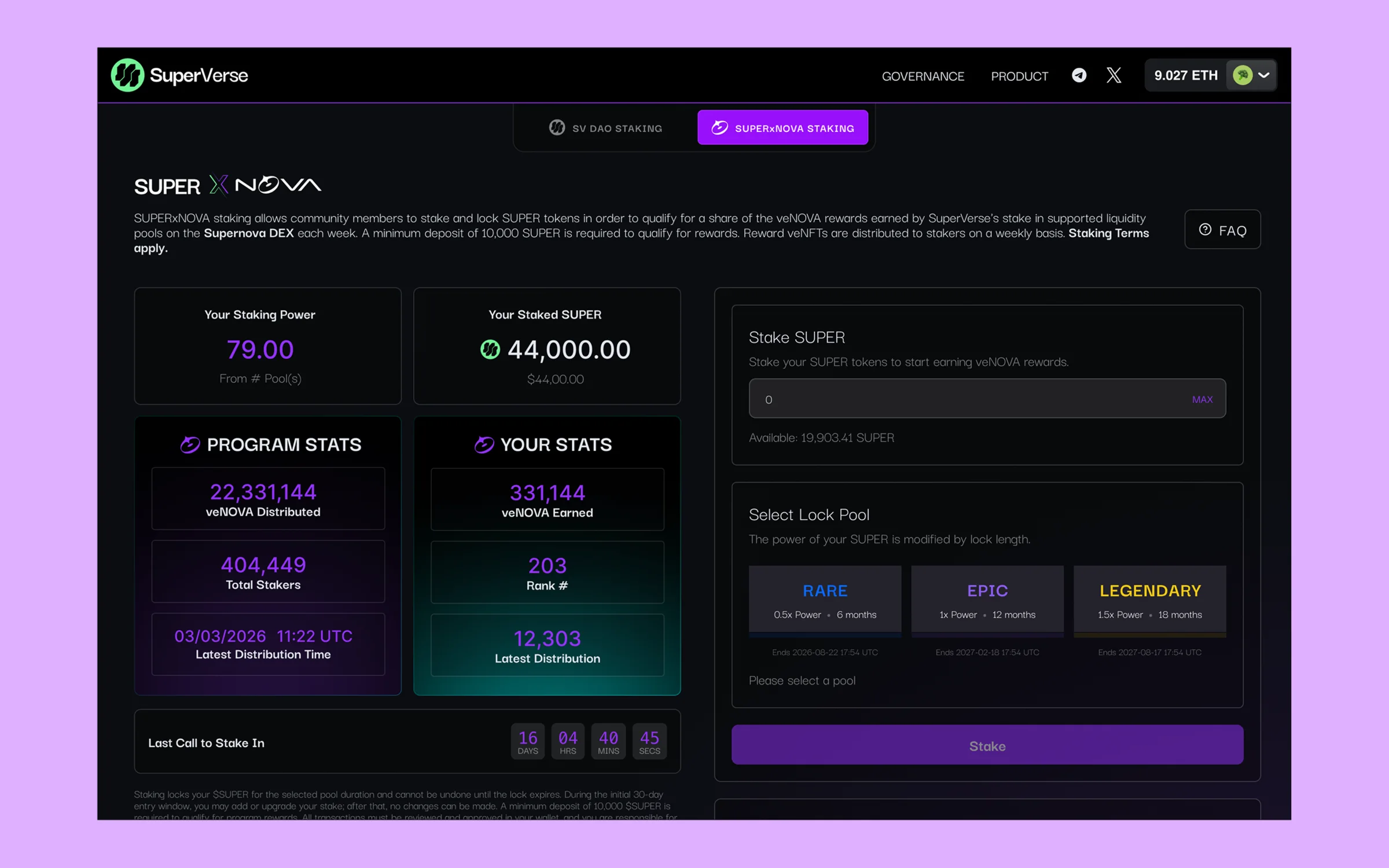
The product grew from a focused DAO staking interface into a broader rewards experience while keeping the core actions, position information and on-chain decisions familiar.
Start a project
Send the Figma, live product, deck or even a rough message. I’ll tell you what I think it needs, whether I’m the right fit and roughly what it’ll cost.
Usually reply within one working day · No sales call required