The problem
A game was only the beginning.
Impostors started with a social-deduction game, but the wider product was much bigger than a game landing page.
Players and holders needed to move between the game, Genesis collectibles, claims, inventory, eligibility, staking, future land and an expanding set of Web3 utilities without feeling like they had entered a completely different product every time.
The challenge was creating a digital system that could introduce the world to a new player while also supporting an established holder who arrived simply to manage assets or complete an on-chain action.
The experience had to connect the entertainment side of Impostors with a growing set of Web3 tools without asking users to learn the whole ecosystem before they could do one simple thing.
What I did
Three decisions shaped the ecosystem.
Kept the game at the centre
The Web3 layer was important, but Impostors still had to feel like a game first.
The design used the world, characters and social-deduction concept to create the emotional entry point, then introduced ownership, collectibles and holder utility in context.
That helped the crypto mechanics support the entertainment experience rather than become the entire product story.
Separated player journeys from holder jobs
A new player exploring Impostors had very different needs from somebody connecting a wallet to check eligibility, claim an item or manage a Genesis collection.
I designed those journeys around the task at hand rather than forcing every user through the same Web3-heavy interface.
The public-facing experience could explain the game and world, while the Genesis Portal became a focused utility layer for existing supporters and holders.
Built for an ecosystem that kept expanding
Genesis Aliens were only one part of the wider system. UFOs, Pets, collectibles, crafting, land, staking and a wider vision for creator tools each introduced new states and relationships.
The design system needed enough structure to keep those experiences recognisable while still allowing new products and mechanics to appear over time.
That mattered because Impostors was conceived as a wider social-gaming ecosystem rather than a single fixed game mode.
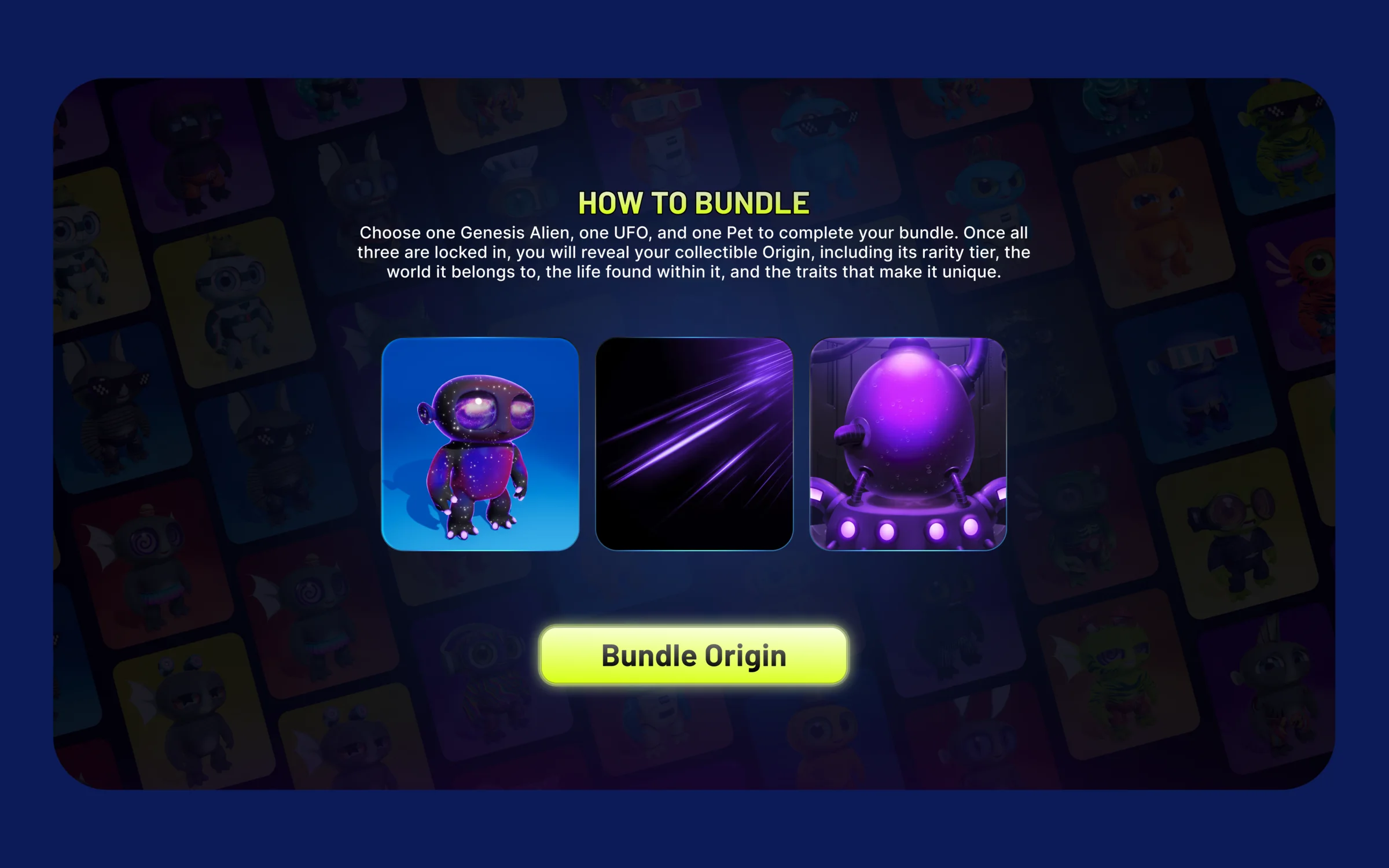
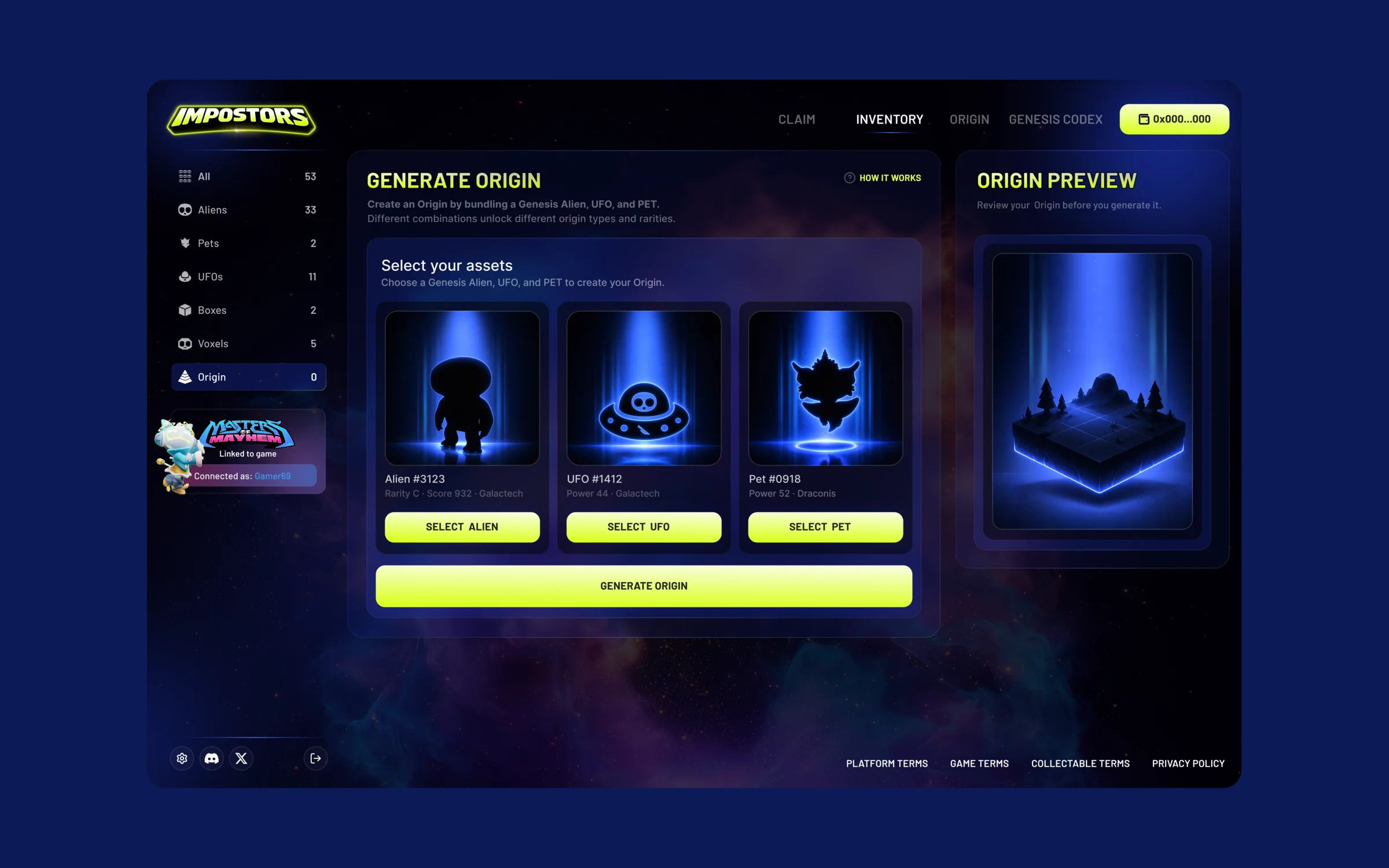
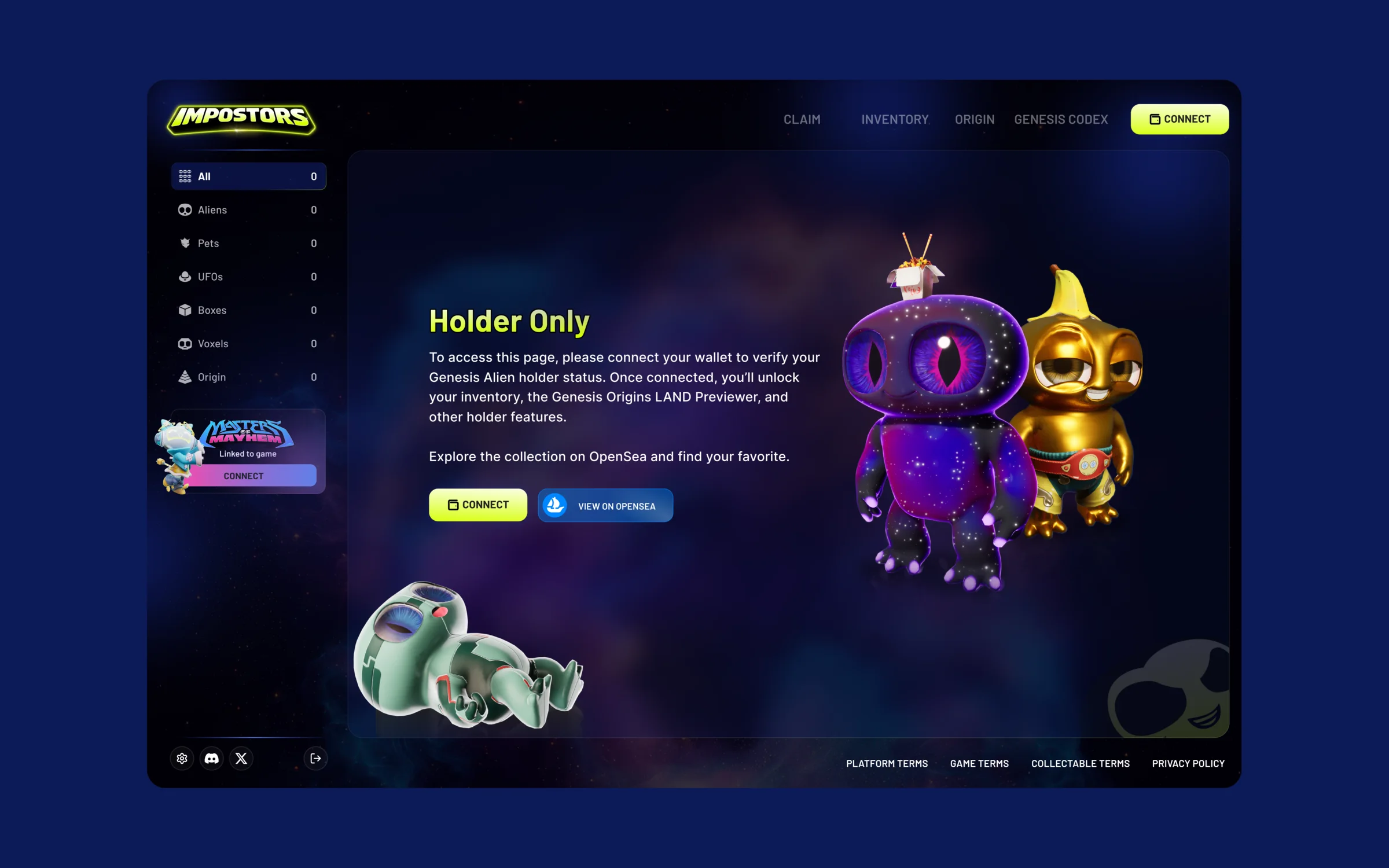
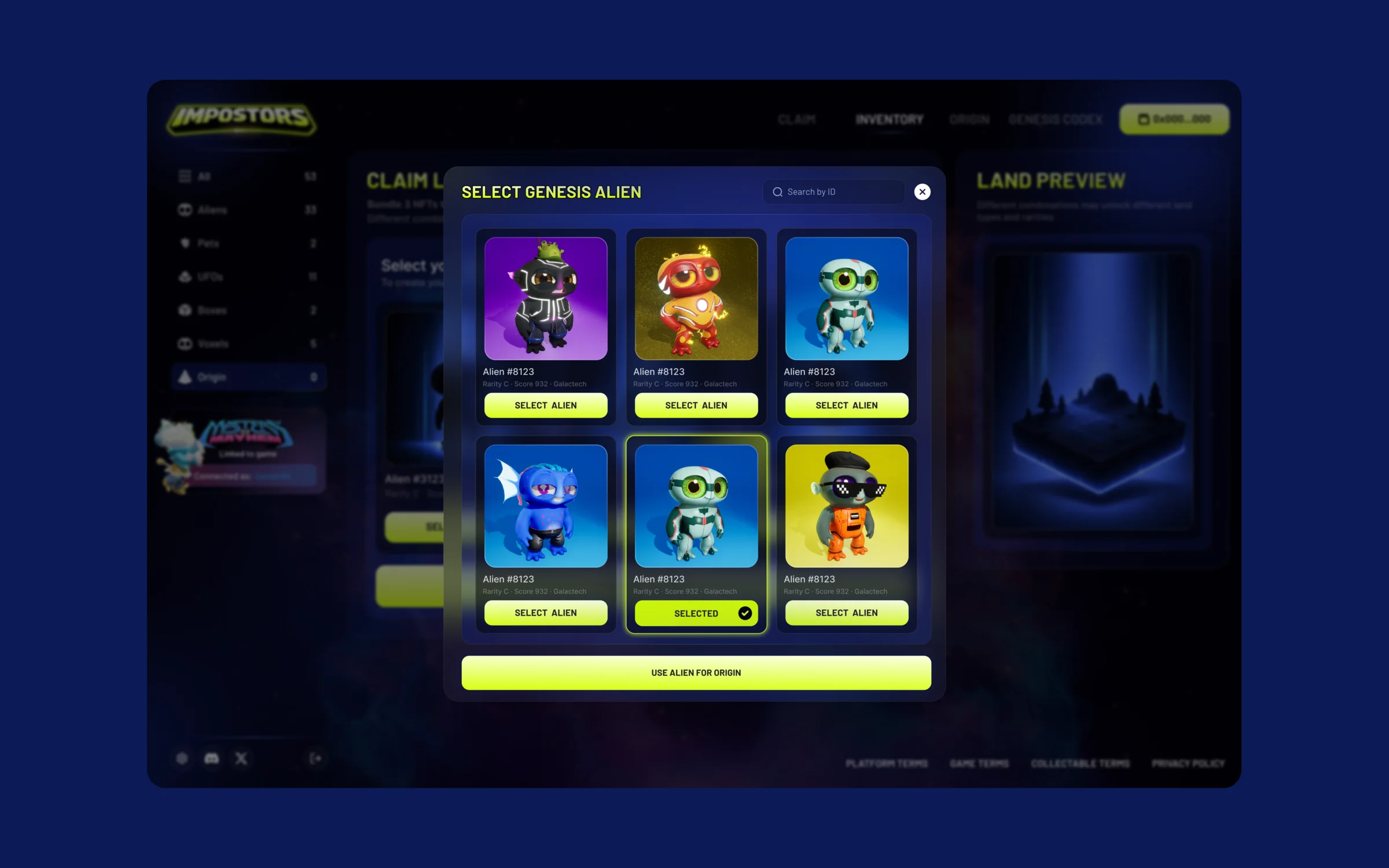
The finished digital system connected the game, its Genesis collections and the growing holder ecosystem while keeping each journey focused on what the user actually came to do.